Upcoming Lift Station Repairs and Improvements – 7515 Hudson Oaks Drive

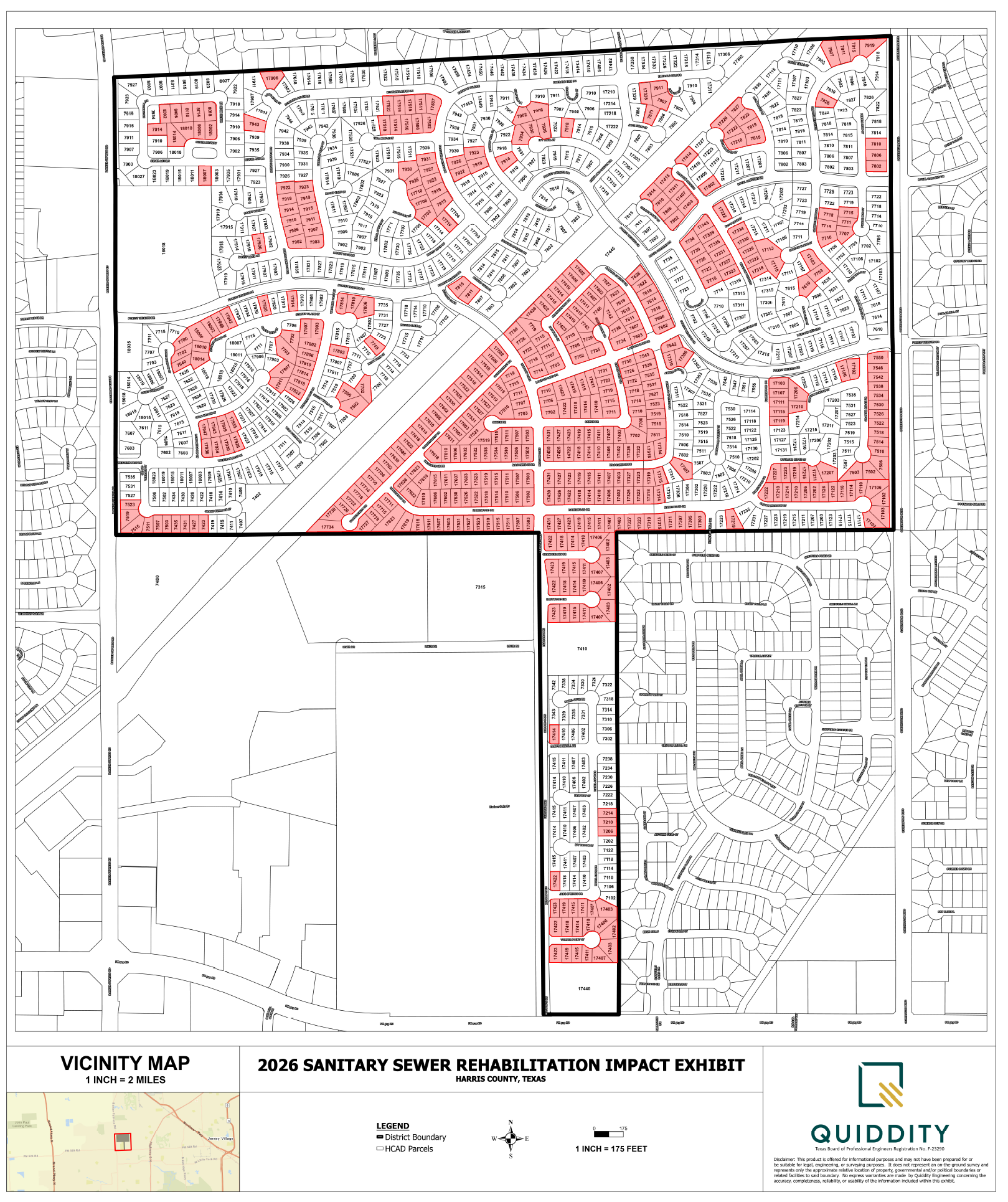
On behalf of the Harris County MUD No. 264 (MUD 264) Board, we are writing to inform you of an upcoming project in your area. The project will make repairs and improvements to MUD 264’s lift station located at 7515 Hudson Oaks Drive. Work is expected to begin on June 1, 2026, and will take approximately 60 calendar days to complete.

While we have planned this project to minimize inconvenience to residents near the lift station, there undoubtedly will be some. At times, you can expect to see large trucks at the entry to the lift station on Hudson Oaks; at no time will the street be blocked to traffic. The sidewalk on the west side of Hudson Oaks will be closed for the duration of the project. Equipment being operated during the project may be noisy; sound attenuation will be applied to keep the noise down to acceptable levels.

The work will be conducted by CROM CFG Industries, LLC, under contract with MUD 264. All employees will be wearing company uniforms. The Contractor’s working hours are 8:00 AM to 6:00 PM Monday through Friday. If you have any questions or concerns, please feel free to contact the District Engineer listed below.

District Engineer:

Quiddity Engineering, LLC
1575 Sawdust Road, Suite 400, The Woodlands, Texas 77380
Mr. Wesley S. Lay, PE
(713) 389-1542

Winter Preparedness: Protecting Your Pipes & Facilities from a Hard Freeze

While winters in Texas are generally mild, we all know that sudden cold fronts can strike without much warning. Homes and businesses—especially in regions like Houston—may not always be equipped to handle a hard freeze. In this issue, we’ll review how freezing conditions can damage pipes and facilities, and highlight the proactive steps we take to protect your systems and maintain smooth operations during extreme cold.

UNDERSTANDING FREEZING TEMPERATURES VS. HARD FREEZES

When temperatures dip below 32°F, it’s considered freezing. Brief periods at this temperature typically cause little to no harm. However, when temperatures fall below 30°F for eight hours or longer, that’s classified as a hard freeze—and it can wreak havoc on exposed lines, irrigation backflow preventers, and other critical water and wastewater components.

As water freezes, it expands, which can lead to burst pipes, water loss, and costly repairs. The aftermath can extend beyond plumbing, resulting in damage to flooring, drywall, furniture, and personal belongings. Even galvanized pipes—while less prone to bursting—can suffer internal separation, creating weak points where corrosion can develop and leaks can form later.

To prevent these issues and keep our customers’ facilities operating reliably, Inframark takes a proactive stance. Our teams monitor forecasts, drain vulnerable lines, secure outdoor fixtures, and provide guidance to our customers on how to prepare for and respond to hard freezes.

HOW TO PREPARE YOUR HOME

A few simple steps can make a big difference when freezing temperatures are in the forecast:

  • Disconnect garden hoses from outdoor spigots. If frozen, don’t move them—they may crack.
  • Wrap exposed pipes and outdoor faucets using foam insulation or spigot covers. Supplies sell out quickly, so plan ahead.
  • Insulate attic pipes, especially those near eaves, as they’re more exposed to cold air.
  • Check water meter lids to ensure they’re securely closed, keeping out freezing winds.
  • Shut off and drain irrigation systems at the backflow preventer, then wrap and insulate them.
  • Gather materials early—foam wrap, heat tape, and insulation kits are often in high demand before a freeze.

If supplies are limited, you can use towels and duct tape as temporary insulation. The most reliable way to avoid freeze damage is to shut off and drain exposed lines, especially irrigation and backflow systems. For households that need running water, periodically running indoor faucets can help keep water moving and prevent ice buildup. Small heaters, heat lamps, or heat tape can also provide localized protection—just use them safely and avoid overloading circuits.

WHEN AND WHERE TO PREPARE FOR A FREEZE

Freeze preparation is a year-round responsibility, not just a last-minute task. Regularly check insulation and protective coverings throughout the winter months. When a cold front is on the way, monitor weather updates for timing, duration, and severity of the freeze. Staying informed and proactive is the best defense against costly damage and downtime.

HOW INFRAMARK PREPARES

Water and wastewater facilities face the same freeze risks as homes—but with much higher stakes. At Inframark, we take a systematic approach to winterization, considering the what, when, where, and how of freeze protection.

Each fall, our teams conduct Freeze Protection Audits to identify vulnerable assets and plan protective measures. Among the components we wrap and insulate are:

  • Above-ground valves
  • Sensor lines
  • Sight glasses for hydropneumatic tanks
  • Backflow preventers
  • Blow-off valves
  • Chemical feed lines
  • Drip oilers for wells
  • Exposed water lines
  • Heaters in control rooms and cabinets

Our objective at Inframark is to complete the winterization process by October, ensuring that all vulnerable components are properly wrapped and insulated to prevent freezing damage. The Operator conducts a freeze protection audit and submits it to their manager, who then conducts a site walk with the Operator to confirm that all potential freezing hazards have been addressed. Taking proactive measures to prevent freeze damage is far more cost-effective than dealing with the consequences afterward. Winterizing all susceptible areas is essential, ensuring a safe winter season for all.